
If you own or manage a gas station today, you already know the business looks very different than it did even five years ago.
Table of Contents
ToggleFood programs have evolved. Coffee bars rival quick-service restaurants. EV chargers are bidding for space at the fuel pumps, and across the industry, operators are investing heavily to meet rising customer expectations.
But while so much attention is focused on transformation with new experiences, one highly visible part of the site is often overlooked—and customers notice it immediately.
The air machine.
It may not feel urgent when you’re managing staffing, inventory, and tight fuel margins. But for today’s driver, tire inflation has quietly become a clear signal of how well a site is run.
And that’s where a growing reliability gap is emerging.
The Reliability Gap on Today’s Forecourt
From an operator’s perspective, the air machine is easy to overlook. It’s something that’s been operating for decades, and something off to the side, addressed when time allows.
From a customer’s perspective, it’s very different.
It’s often their first or last interaction with your location. And when it doesn’t work smoothly or feels outdated, it creates friction points and dissatisfaction. Not just regarding the machine but it reshapes how the entire site is perceived.
In 2026, that gap is showing up in three key ways:
Gap #1: Cashless Payments
Today, the vast majority of transactions are digital—tap-to-pay, mobile wallets, and contactless cards.
Yet many air machines still require coins.
That forces customers to either abandon the machine, go inside or search their automobile for change just to complete a simple task. For time-conscious drivers, that inconvenience often leads to one decision: leave and go elsewhere.
This friction point immediately undermines customer loyalty, because convenience isn’t a differentiator anymore—it’s the baseline.
Gap #2: The “Broken Window” Effect
Customers don’t evaluate your site in pieces—they evaluate it as a whole. Is your business the place to visit for the small conveniences that matter a lot?
A clean canopy and modern pumps build trust. But a rusted air machine, tangled hose, or “Out of Order” sign can undo that impression instantly.
It introduces doubt: If this isn’t maintained, what else isn’t? No broken windows allowed!
Small visual breakdowns create big perception problems.
Gap #3: Rising Expectations for Precision
As automobiles become technologically savvy, knowledge of tire pressure changes is immediate and the increase in electric vehicles means that precise inflation is more important.
EVs are heavier and more sensitive to tire pressure, directly impacting range and performance. Their tires wear faster, and inflation is critical. EV drivers are increasingly aware of this.
Also, braking systems are calibrated based upon tires that are properly inflated. Over inflated/under inflated tires can affect braking systems. This leads to longer stopping distances and reduced braking effectiveness, especially in wet or emergency conditions.
Drivers don’t want to guess. They expect to set a PSI, press start, and trust it’s ac
A Minor Upgrade Opportunity that Delivers Big Returns
For years, the air machine has been treated as a maintenance item—not a strategic asset. But forward-thinking operators are starting to see it differently.
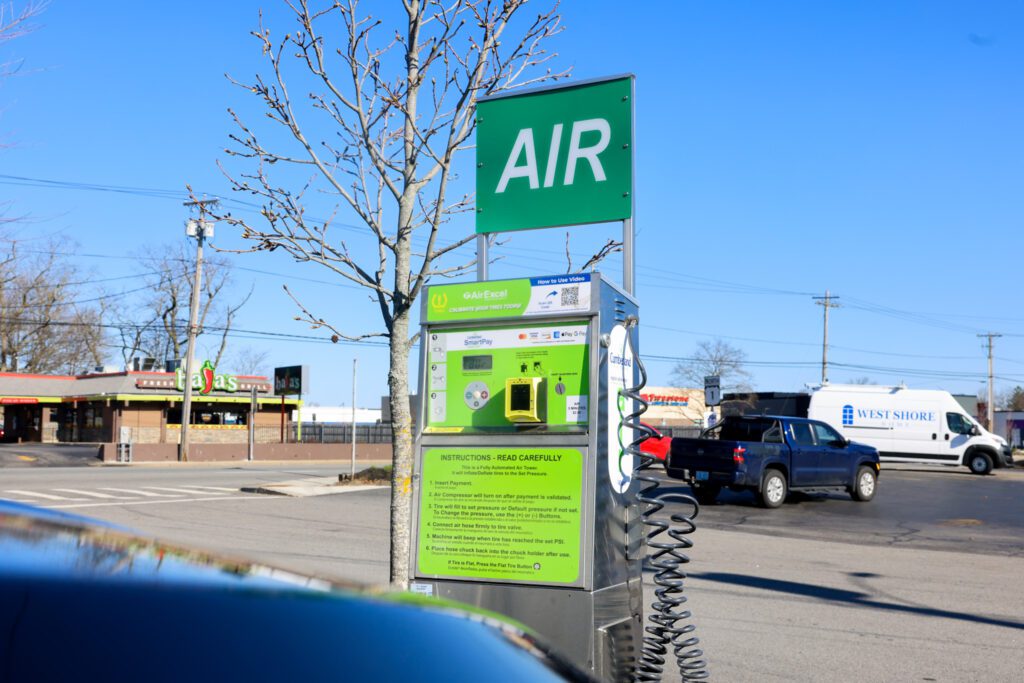
A clean, modern, easy-to-use inflation system sends a clear message: this site pays attention to the details.
And in today’s environment, details are what build trust—and drive repeat visits.
Unlike major remodels or expansions, upgrading your air machine doesn’t require major capital, staffing changes, or operational disruption.
But the impact is immediate.
Modern air inflation machine systems:
- Support cashless payments
- Deliver precise, digital PSI settings
- Offer real-time monitoring and higher uptime
- Can be branded with your business’ name
Because in 2026, success in convenience retail isn’t just about big investments—it’s about eliminating small points of failure across the entire customer journey.
If a customer’s first interaction is frustrating, you may never get them inside.
The most successful operators understand that every touchpoint shapes perception. And sometimes, the biggest opportunity on your forecourt is right in front of you.
Fixing the small things that customers rely on every day—and turning them into signals of reliability, safety, and trust deliver bigger outcomes, and truly pays off when it comes to building loyal customers.

